ZYRTEC® Allergy Products and Dosing
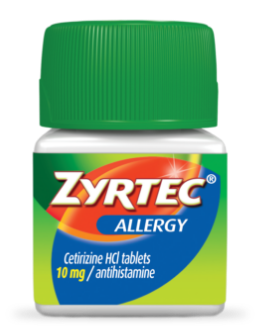
Use product only as directed.
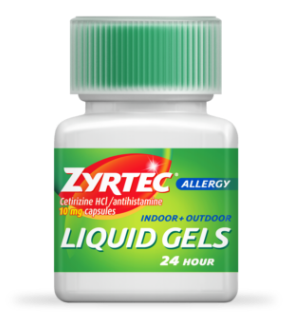
Use product only as directed.
Use product only as directed.
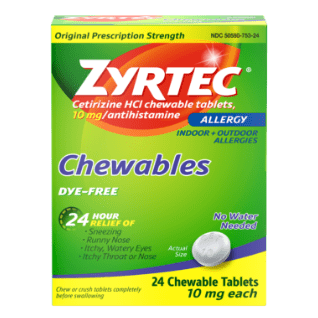
ZYRTEC® Chewables
Great tasting chewable for allergy relief that stays strong day after day.
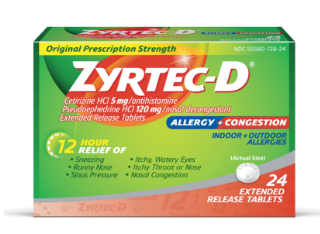
Use product only as directed.
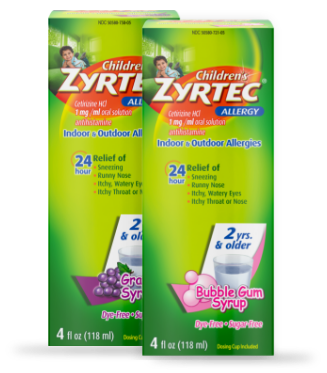
Use product only as directed.
Children’s ZYRTEC® Allergy Syrup
Kid-friendly syrup provides relief for kids ages 2 years and up.
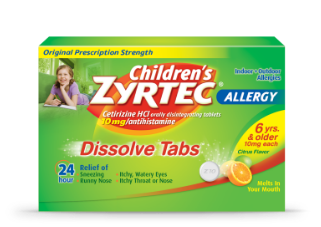
Use product only as directed.
Children’s ZYRTEC® Dissolve Tabs
Melt-away tablets provide 24-hour relief from kids’ indoor and outdoor allergy symptoms.
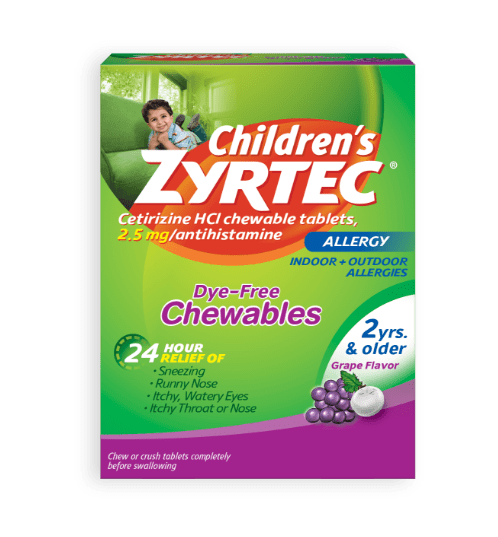
Use product only as directed.
Children’s ZYRTEC® Chewables 2.5 mg
Relief from ZYRTEC® in a convenient chewable tablet for kids 2 yrs and older.
Use product only as directed.
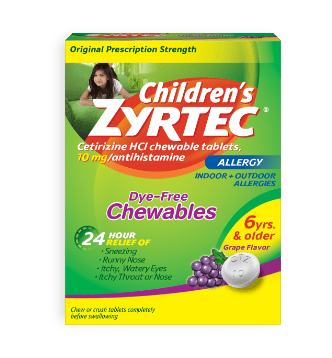
Children’s ZYRTEC® Chewables 10 mg
Relief from ZYRTEC® in a convenient chewable tablet for kids 6 yrs and older.
*Relieves sneezing; runny nose; itchy, watery eyes; and itching of the nose or throat.
†ZYRTEC® 10 mg starts working at hour 1, based on first dose on the first day of a 2-day study in 2 pollen chamber studies. Primary endpoint measured mean improvement from baseline in Major Symptom Complex (MSC) severity score. MSC symptoms included runny nose, sniffles, itchy nose, nose blows, sneezes, and watery eyes.
In addition to medicine-disposal regulations for pharmacies, some states have community take-back programs through which patients can return unused drugs. If your area has such a program, encourage patients to contact their local pharmacy or local authority to learn how to use it.
If no take-back program is available, you may want to advise patients to follow these guidelines:
-
 Unless instructed otherwise, do
not dispose of unused medicines
by
emptying them into a sink, toilet, or storm drain
Unless instructed otherwise, do
not dispose of unused medicines
by
emptying them into a sink, toilet, or storm drain
-
 Place unused medicines in an
unrecognizable sealed container,
and
ensure that children, pets, and others do not have
access to the contents of the container
Place unused medicines in an
unrecognizable sealed container,
and
ensure that children, pets, and others do not have
access to the contents of the container
-
 Dispose of the container in
household trash
Dispose of the container in
household trash